|
liblapackwrap 0.1
|
|
liblapackwrap 0.1
|
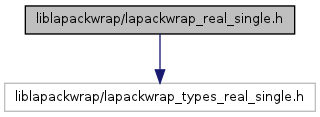
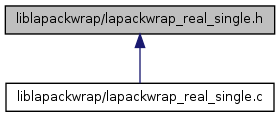
#include <liblapackwrap/lapackwrap_types_real_single.h> Include dependency graph for lapackwrap_real_single.h: This graph shows which files directly or indirectly include this file:
Go to the source code of this file.
Defines | |
| #define | LLW_CONST const |
Functions | |
| int | llw_real_single_stegr (char jobz, char range, int N, LLW_CONST LLW_real_single_REAL *D, LLW_CONST LLW_real_single_REAL *E, LLW_real_single_REAL VL, LLW_real_single_REAL VU, int IL, int IU, int *M, LLW_real_single_REAL *W, LLW_real_single_COMPLEX *Z, int LDZ, int *ISUPPZ) |
| int | llw_real_single_stegr_a (char jobz, char range, int N, LLW_CONST LLW_real_single_REAL *D, LLW_CONST LLW_real_single_REAL *E, LLW_real_single_REAL VL, LLW_real_single_REAL VU, int IL, int IU, int *M, LLW_real_single_REAL **W, LLW_real_single_COMPLEX **Z, int *LDZ, int **ISUPPZ) |
| int | llw_real_single_sbtrd_a (char vect, char uplo, int N, int KD, LLW_CONST LLW_real_single_COMPLEX *A, int LDAB, LLW_real_single_REAL **D, LLW_real_single_REAL **E, LLW_real_single_COMPLEX **Q) |
| int | llw_real_single_sbtrd (char vect, char uplo, int N, int KD, LLW_CONST LLW_real_single_COMPLEX *AB, int LDAB, LLW_real_single_REAL *D, LLW_real_single_REAL *E, LLW_real_single_COMPLEX *Q, int LDQ) |
| int | llw_real_single_sytrd (char uplo, int N, LLW_CONST LLW_real_single_COMPLEX *A, LLW_real_single_REAL *D, LLW_real_single_REAL *E, LLW_real_single_COMPLEX *TAU, LLW_real_single_COMPLEX **a_out) |
| int | llw_real_single_orgtr (char uplo, int N, LLW_real_single_COMPLEX *A, LLW_real_single_COMPLEX *TAU) |
| #define LLW_CONST const |
Definition at line 48 of file lapackwrap_real_single.h.
| int llw_real_single_orgtr | ( | char | uplo, |
| int | N, | ||
| LLW_real_single_COMPLEX * | A, | ||
| LLW_real_single_COMPLEX * | TAU | ||
| ) |
Turns the output of a tridiagonalization into a matrix which will help convert the eigvals to the old basis
Definition at line 270 of file lapackwrap_real_single.c.
References LAPACK_COMPLEX_TYPENAME, LLW_real_single_COMPLEX, and ORGTR.
                                                                                                      {
  int info;
  #if LAPACK == ACML
  ORGTR(uplo, N, (LAPACK_COMPLEX_TYPENAME*)A, N, (LAPACK_COMPLEX_TYPENAME*)TAU, &info);
  #else
  LLW_real_single_COMPLEX opt_work;
  #ifdef FCALL
  int MONE = -1;
  ORGTR(&uplo, &N,  (LAPACK_COMPLEX_TYPENAME*)A, &N,  (LAPACK_COMPLEX_TYPENAME*)TAU,  (LAPACK_COMPLEX_TYPENAME*)&opt_work, &MONE, &info);
  #else
  ORGTR(uplo, N,  (LAPACK_COMPLEX_TYPENAME*)A, N,  (LAPACK_COMPLEX_TYPENAME*)TAU,  (LAPACK_COMPLEX_TYPENAME*)&opt_work, -1, &info);
  #endif
  if(info != 0) {
    return info;
  }
  int OWORK = (int)
      #ifdef LLW_real_single_IS_COMPLEX
              opt_work.re
      #else
              opt_work
            #endif
    ;
  LLW_real_single_COMPLEX* work = (LLW_real_single_COMPLEX*)malloc(sizeof(LLW_real_single_COMPLEX)*OWORK);
  #ifdef FCALL
  ORGTR(&uplo, &N,  (LAPACK_COMPLEX_TYPENAME*)A, &N,  (LAPACK_COMPLEX_TYPENAME*)TAU,  (LAPACK_COMPLEX_TYPENAME*)work, &OWORK, &info);
  #else
  ORGTR(uplo, N,  (LAPACK_COMPLEX_TYPENAME*)A, N,  (LAPACK_COMPLEX_TYPENAME*)TAU,  (LAPACK_COMPLEX_TYPENAME*)work, OWORK, &info);
  #endif
  #endif
  return info;
}
| int llw_real_single_sbtrd | ( | char | vect, |
| char | uplo, | ||
| int | N, | ||
| int | KD, | ||
| LLW_CONST LLW_real_single_COMPLEX * | AB, | ||
| int | LDAB, | ||
| LLW_real_single_REAL * | D, | ||
| LLW_real_single_REAL * | E, | ||
| LLW_real_single_COMPLEX * | Q, | ||
| int | LDQ | ||
| ) |
Gets the tri-diagonal matrix for a banded matrix.
Definition at line 188 of file lapackwrap_real_single.c.
References LAPACK_COMPLEX_TYPENAME, LLW_real_single_COMPLEX, and SBTRD.
Referenced by llw_real_single_sbtrd_a().
                                                                                                                                                                                                       {
  LLW_real_single_COMPLEX *ab;
  #ifdef LLW_CONST
  ab = (LLW_real_single_COMPLEX*)malloc(N*(KD+1)*sizeof(LLW_real_single_COMPLEX));
  if(ab == NULL) return 100;
  memcpy(ab, AB, N*(KD+1)*sizeof(LLW_real_single_COMPLEX));
  #else
  ab = AB;
  #endif
  int info;
  #if LAPACK == ACML
  SBTRD(vect, uplo, N, KD, (LAPACK_COMPLEX_TYPENAME*)ab, LDAB, D, E,  (LAPACK_COMPLEX_TYPENAME*)Q, LDQ, &info);
  #else
  LLW_real_single_COMPLEX *work = (LLW_real_single_COMPLEX*)malloc(N*sizeof(LLW_real_single_COMPLEX));
  if(work == NULL) {
    #ifdef LLW_CONST
    free(ab);
    #endif
    return 100;
  }
  #ifdef FCALL
  SBTRD(&vect, &uplo, &N, &KD,  (LAPACK_COMPLEX_TYPENAME*)ab, &LDAB, D, E,  (LAPACK_COMPLEX_TYPENAME*)Q, &LDQ,  (LAPACK_COMPLEX_TYPENAME*)work, &info);
  #else
  SBTRD(vect, uplo, N, KD,  (LAPACK_COMPLEX_TYPENAME*)ab, LDAB, D, E,  (LAPACK_COMPLEX_TYPENAME*)Q, LDQ,  (LAPACK_COMPLEX_TYPENAME*)work, &info);
  #endif
  free(work);
  #endif
  return info;
}
Here is the caller graph for this function:| int llw_real_single_sbtrd_a | ( | char | vect, |
| char | uplo, | ||
| int | N, | ||
| int | KD, | ||
| LLW_CONST LLW_real_single_COMPLEX * | A, | ||
| int | LDAB, | ||
| LLW_real_single_REAL ** | D, | ||
| LLW_real_single_REAL ** | E, | ||
| LLW_real_single_COMPLEX ** | Q | ||
| ) |
This is the same as llw_real_single_sbtrd, but with dynamic allocation of D, E, and Q.
Definition at line 171 of file lapackwrap_real_single.c.
References LLW_real_single_COMPLEX, LLW_real_single_REAL, and llw_real_single_sbtrd().
                                                                                                                                                                                                  {
  *D = (LLW_real_single_REAL*)malloc(N*sizeof(LLW_real_single_REAL));
  if(*D == NULL) return 100;
  *E = (LLW_real_single_REAL*)malloc((N-1)*sizeof(LLW_real_single_REAL));
  if(*E == NULL) {
    free(D);
    return 100;
  }
  *Q = (LLW_real_single_COMPLEX*)malloc(N*N*sizeof(LLW_real_single_COMPLEX));
  if(*Q == NULL) {
    free(D);
    free(E);
    return 100;
  }
  return llw_real_single_sbtrd(vect, uplo, N, KD, A, LDAB, *D, *E, *Q, N);
}
Here is the call graph for this function:| int llw_real_single_stegr | ( | char | jobz, |
| char | range, | ||
| int | N, | ||
| LLW_CONST LLW_real_single_REAL * | D, | ||
| LLW_CONST LLW_real_single_REAL * | E, | ||
| LLW_real_single_REAL | VL, | ||
| LLW_real_single_REAL | VU, | ||
| int | IL, | ||
| int | IU, | ||
| int * | M, | ||
| LLW_real_single_REAL * | W, | ||
| LLW_real_single_COMPLEX * | Z, | ||
| int | LDZ, | ||
| int * | ISUPPZ | ||
| ) |
wrapper around dstegr/dstegr_
Definition at line 68 of file lapackwrap_real_single.c.
References LAPACK_COMPLEX_TYPENAME, LLW_real_single_REAL, and STEGR.
Referenced by llw_real_single_stegr_a().
                                                                                                                                                                                                                                                                                   {
  /*
  fprintf(stderr, "llw_real_single_stegr: %c %c %d %p %p %g %g %d %d %p %p %p %d %p\n", jobz, range, N, (void*)D, (void*)E, VL, VU, IL, IU, (void*)M, (void*)W, (void*)Z, LDZ, (void*)ISUPPZ);
  */
  /*Now do our STEGR call*/
  /*NOTE e_in is of length N. We copy only N-1 (since E is N-1 values; it's the first subdiagonal. HOWEVER, e_in[N-1] (i.e., the Nth element) is used internally by LAPACK as a workspace, so we need it in here.*/
  LLW_real_single_REAL *e_in;
  LLW_real_single_REAL *d_in;
  #ifdef LLW_CONST
  e_in = malloc(N*sizeof(LLW_real_single_REAL));
  d_in = malloc(N*sizeof(LLW_real_single_REAL));
  if((e_in == NULL) || (d_in == NULL)) {
    if(e_in != NULL) free(e_in);
    if(d_in != NULL) free(d_in);
    return 100;
  }
  memcpy(e_in, E, (N-1)*sizeof(LLW_real_single_REAL));
  memcpy(d_in, D, N*sizeof(LLW_real_single_REAL));
  #else
  e_in = E;
  d_in = D;
  #endif
  /*Initialize our output storage*/
  /*
  *M = 0;
  for(int i=0; i<N; i++) {
    W[i] = 0;
    for(int j=0; j<LDZ; j++) {
      Z[j + i*LDZ] = 0;
    }
    ISUPPZ[2*i] = ISUPPZ[2*i + 1] = 0;
  }
  for(int i=0; i<N-1; i++) {
    fprintf(stderr, "d[%d]=", i);
    fprintf(stderr, "%g ", d_in[i]);
    fprintf(stderr, "e[%d]=", i);
    fprintf(stderr, "=%g\n", e_in[i]);
    fprintf(stderr, "D[%d]=", i);
    fprintf(stderr, "%g ", D[i]);
    fprintf(stderr, "E[%d]=", i);
    fprintf(stderr, "=%g\n", E[i]);
  }
  fprintf(stderr, "D[%d]=%g\n", N, D[N-1]);
  fprintf(stderr, "d[%d]=%g\n", N, d_in[N-1]);
  */
  /*First, query optimal work size*/
  /*
  for(int i=0; i<N; i++) {
    fprintf(stderr, "D[%d]=%g d_in=%g E=%g e_in=%g\n",
      i,
      D[i],
      d_in[i],
      E[i],
      (i == (N-1))?0:e_in[1]);
  }
  */
  int info;
#if LAPACK == ACML
  /*ACML's C interface doesn't require the work and iwork arrays.
   *So with ACML, we just dive right in.
   */
  STEGR(jobz, range, N, d_in, e_in, VL, VU, IL, IU, 1e-12, M, W, (LAPACK_COMPLEX_TYPENAME*)Z, LDZ, ISUPPZ, &info);
#else
  /*The rest of the LAPACK implementations require work and iwork,
   *  so we'll query the optimal values before making the real call.
   */
  LLW_real_single_REAL opt_lwork;
  int opt_liwork;
#ifdef FCALL
  /*Look at all the fun in a FORTRAN call. Whee!*/
  LLW_real_single_REAL EPSILON=1e-12;
  int MONE = -1;
  STEGR(&jobz, &range, &N, d_in, e_in, &VL, &VU, &IL, &IU, &EPSILON, M, W, (LAPACK_COMPLEX_TYPENAME*)Z, &LDZ, ISUPPZ, &opt_lwork, &MONE, &opt_liwork, &MONE, &info);
#else
  STEGR(jobz, range, N, d_in, e_in, VL, VU, IL, IU, 1e-12, M, W, (LAPACK_COMPLEX_TYPENAME*)Z, LDZ, ISUPPZ, &opt_lwork, -1, &opt_liwork, -1, &info);
#endif
  if(info != 0) {
    #ifdef LLW_CONST
    free(e_in);
    free(d_in);
    #endif
    return info;
  }
  LLW_real_single_REAL *work = malloc(sizeof(LLW_real_single_REAL)*((int)opt_lwork));
  int *iwork = malloc(sizeof(int)*opt_liwork);
  #ifdef FCALL
  int LWORK = opt_lwork;
  STEGR(&jobz, &range, &N, d_in, e_in, &VL, &VU, &IL, &IU, &EPSILON, M, W, (LAPACK_COMPLEX_TYPENAME*)Z, &LDZ, ISUPPZ, work, &LWORK, iwork, &opt_liwork, &info);
  #else
  STEGR(jobz, range, N, d_in, e_in, VL, VU, IL, IU, 1e-12, M, W, (LAPACK_COMPLEX_TYPENAME*)Z, LDZ, ISUPPZ, work, opt_lwork, iwork, opt_liwork, &info);
  #endif
  free(work);
  free(iwork);
  #endif
  #ifdef LLW_CONST
  free(e_in);
  free(d_in);
  #endif
  return info;
}
Here is the caller graph for this function:| int llw_real_single_stegr_a | ( | char | jobz, |
| char | range, | ||
| int | N, | ||
| LLW_CONST LLW_real_single_REAL * | D, | ||
| LLW_CONST LLW_real_single_REAL * | E, | ||
| LLW_real_single_REAL | VL, | ||
| LLW_real_single_REAL | VU, | ||
| int | IL, | ||
| int | IU, | ||
| int * | M, | ||
| LLW_real_single_REAL ** | W, | ||
| LLW_real_single_COMPLEX ** | Z, | ||
| int * | LDZ, | ||
| int ** | ISUPPZ | ||
| ) |
same as dstegr, but allocation of W, Z, and SUPPZ is done internally
Definition at line 35 of file lapackwrap_real_single.c.
References LLW_real_single_COMPLEX, LLW_real_single_REAL, and llw_real_single_stegr().
                                                                                                                                                                                                                                                                                         {
  *W = malloc(sizeof(LLW_real_single_REAL)*N);
  if(*W == NULL) {
    return 100;
  }
  /*Right now, we're just doing N.*/
  *LDZ = N;
  *Z = malloc(sizeof(LLW_real_single_COMPLEX)*(*LDZ)*N);
  if(*Z == NULL) {
    free(*W);
    *W = NULL;
    return 100;
  }
  *ISUPPZ = malloc(sizeof(LLW_real_single_REAL)*2*N);
  if(*ISUPPZ == NULL) {
    free(*W);
    *W = NULL;
    free(*Z);
    *Z = NULL;
    return 100;
  }
  int info = llw_real_single_stegr(jobz, range, N, D, E, VL, VU, IL, IU, M, *W, *Z, *LDZ, *ISUPPZ);
  if(info != 0) {
    free(*W);
    *W = NULL;
    free(*Z);
    *Z = NULL;
    free(*ISUPPZ);
    *ISUPPZ = NULL;
  }
  return info;
}
Here is the call graph for this function:| int llw_real_single_sytrd | ( | char | uplo, |
| int | N, | ||
| LLW_CONST LLW_real_single_COMPLEX * | A, | ||
| LLW_real_single_REAL * | D, | ||
| LLW_real_single_REAL * | E, | ||
| LLW_real_single_COMPLEX * | TAU, | ||
| LLW_real_single_COMPLEX ** | a_out | ||
| ) |
Gets the tridiagonal matrix for a symmetric matrix.
| uplo | 'U' if upper triangle is desired, 'L' if lower triangle |
| N | size of an edge of A (since it's symmetric, is NxN) |
| A | original matrix |
| D | the diagonal of the final tridiag matrix |
| E | the upper (lower) subdiagonal. |
| TAU | LLW_CONSTs (needed for llw_real_single_orgr to get Q |
| a_out | pointer to a pointer to a LLW_real_single_REAL; used to save the resulting matrix (is A with output stored in it, as described by netlib's documentation on sytrd. |
LAPACK wrapper for DSYTRD.
Definition at line 223 of file lapackwrap_real_single.c.
References LAPACK_COMPLEX_TYPENAME, LLW_real_single_COMPLEX, and SYTRD.
                                                                                                                                                                                                   {
  LLW_real_single_COMPLEX **aa;
  LLW_real_single_COMPLEX *a;
  if(a_out != NULL) {
    a = *a_out;
  }else{
    /*Point aa to a LLW_real_single_COMPLEX pointer on the stack if the user doesn't want it*/
    aa = &a;
  }
  *aa = malloc(sizeof(LLW_real_single_COMPLEX)*N*N);
  if(a == NULL) return 100;
  memcpy(*aa, A, N*N*sizeof(LLW_real_single_COMPLEX));
  int info;
  #if LAPACK == ACML
  SYTRD(uplo, N,  (LAPACK_COMPLEX_TYPENAME*)*aa, N, D, E,  (LAPACK_COMPLEX_TYPENAME*)TAU, &info);
  #else
  LLW_real_single_COMPLEX opt_work;
  #ifdef FCALL
  int MONE = -1;
  SYTRD(&uplo, &N,  (LAPACK_COMPLEX_TYPENAME*)*aa, &N, D, E,  (LAPACK_COMPLEX_TYPENAME*)TAU,  (LAPACK_COMPLEX_TYPENAME*)&opt_work, &MONE, &info);
  #else
  SYTRD(uplo, N,  (LAPACK_COMPLEX_TYPENAME*)*aa, N, D, E,  (LAPACK_COMPLEX_TYPENAME*)TAU,  (LAPACK_COMPLEX_TYPENAME*)&opt_work, -1, &info);
  #endif
  if(info != 0) {
    if(a_out != NULL) free(a);
    return info;
  }
  int OWORK = (int)
      #ifdef LLW_real_single_IS_COMPLEX
              opt_work.re
      #else
              opt_work
            #endif
    ;
  LLW_real_single_COMPLEX* work = malloc(sizeof(LLW_real_single_COMPLEX)*(OWORK));
  #ifdef FCALL
  SYTRD(&uplo, &N,  (LAPACK_COMPLEX_TYPENAME*)*aa, &N, D, E,  (LAPACK_COMPLEX_TYPENAME*)TAU,  (LAPACK_COMPLEX_TYPENAME*)work, &OWORK, &info);
  #else
  SYTRD(uplo, N,  (LAPACK_COMPLEX_TYPENAME*)*aa, N, D, E,  (LAPACK_COMPLEX_TYPENAME*)TAU,  (LAPACK_COMPLEX_TYPENAME*)work, OWORK, &info);
  #endif
  #endif
  if(a_out != NULL) free(a);
  return info;
}
 1.7.3
1.7.3